
Most people know creatine as a gym supplement. Fewer know it as a brain nutrient. Yet the brain runs on the same ATP energy currency as muscle, and it faces its own version of energetic crisis during sleep deprivation, mental fatigue, and stress. A 2026 narrative review by Candow and colleagues examines the emerging evidence on creatine monohydrate during conditions of increased brain metabolic demand, including sleep deprivation, hypoxia, prolonged mental fatigue, mood disorders, and traumatic brain injury. Although the findings are promising, the authors also highlight important differences among studies and several unanswered questions. What follows is a plain-language breakdown of the research, its current limitations, and what it may mean for supporting cognitive performance during periods of unusually high mental or metabolic demand.
Sleep deprivation, mental fatigue, and chronic stress are three of the most pervasive threats to cognitive performance in modern life. Whether you’re a shift worker, student, athlete, or busy professional, insufficient sleep degrades focus, decision-making, and mood, often leaving you trapped in a cycle of sleep deprivation and brain fog. Emerging research, including a 2026 narrative review, Creatine supplementation for brain metabolic stress: a narrative review, published in Academia Neuroscience and Brain Research by Candow et al.,: suggests that creatine monohydrate may help support certain aspects of cognitive performance when the brain is challenged by sleep deprivation, prolonged mental effort, or other forms of metabolic stress. The evidence is promising, but it remains limited to a relatively small number of studies that used different doses, populations, and cognitive tests.
What is sleep deprivation? Simply put, it occurs when a person does not obtain sufficient restorative sleep, either in quantity (total hours) or quality (deep, uninterrupted sleep cycles). Most adults generally need approximately 7–9 hours of sleep per night. Even one night of substantial sleep loss can impair attention, reaction time, decision-making, mood, and other aspects of cognitive performance.
Sleep deprivation is remarkably widespread. It affects:
The neurological impact is substantial. Sleep deprivation impairs cognitive performance across multiple domains, including working memory, executive function, reaction time, and emotional regulation. It alters cerebral energy regulation, increases sleep pressure, and can disrupt the neural processes involved in attention, memory, decision-making, and emotional regulation.
Insufficient sleep can affect more than concentration and mood. Some people experience physical symptoms such as headaches, nausea, appetite changes, lightheadedness, muscle soreness, or reduced exercise performance after a period of poor sleep.
These symptoms are not specific to sleep deprivation and may have many possible causes. Persistent headaches, dizziness, nausea, or unexplained hair shedding should not automatically be attributed to poor sleep and may warrant evaluation by a qualified healthcare professional.
The experience of fatigue and mental fog after poor sleep is not simply a matter of motivation. Sleep deprivation creates a period of elevated metabolic demand and alters how the brain regulates and uses energy.
Key processes that drive mental fog include:
This is the fundamental problem that creatine supplementation is positioned to address.
Creatine for brain function works through the phosphocreatine (PCr) energy system. PCr acts as a rapid ATP buffer: when cellular demand spikes, the creatine kinase enzyme catalyzes the transfer of a phosphate group from PCr to ADP, regenerating ATP almost instantaneously. This reaction can provide rapid energy support without waiting for slower energy-producing pathways, which may be particularly useful during periods of elevated metabolic demand.
Human studies suggest that creatine monohydrate supplementation can modestly increase brain creatine content, although the response appears smaller and less predictable than the increase typically observed in skeletal muscle.. Proposed effects of increasing brain creatine availability include:
These mechanisms are biologically plausible, but not all have been conclusively demonstrated in humans taking creatine supplements.
The evidence is promising, but still based on a relatively small number of human trials with differing doses, populations, and cognitive outcomes.. The 2026 narrative review by Candow et al. synthesizes findings across multiple controlled human trials:
Early studies using creatine-loading protocols of approximately 20 g/day for seven days reported smaller declines in selected measures of cognitive performance, balance, and mood following 24–36 hours of sleep deprivation compared with placebo. Specifically, creatine attenuated declines in random movement generation, choice reaction time, balance, and mood state compared to placebo. These tasks depend heavily on prefrontal cortex function — precisely the region most vulnerable to energy deficits.
A 2024 study by Gordji-Nejad et al. used phosphorus magnetic resonance spectroscopy (MRS) to assess the effects of a single high dose of CrM (0.35 g/kg) during 21 hours of sleep deprivation. The results provided evidence that creatine influenced cerebral energy metabolism during sleep deprivation. These biochemical changes were accompanied by improvements in selected cognitive measures during the period approximately 3–7.5 hours after ingestion. The dose was much higher than a typical daily supplement dose and should not be treated as a routine consumer recommendation.
A 2025 follow-up from the same research group examined whether a high single dose of creatine affected differences in high-energy phosphate metabolism between brain hemispheres during sleep deprivation. These findings are mechanistically interesting, but their practical clinical significance is not yet clear.
Athletic performance under sleep restriction: A study by Cook et al. had elite rugby players supplement with creatine (50 or 100 mg/kg) under acute sleep restriction (3–5 hours). Sleep deprivation significantly reduced passing accuracy, but creatine reduced the decline in passing accuracy at both tested doses. This suggests a possible performance benefit under acute sleep restriction, although the findings came from a specific group of elite rugby players and should not automatically be generalized to all athletes or cognitive tasks.
Sleep outcomes: Preliminary studies have reported improvements in subjective sleep quality or sleep duration in specific populations and circumstances. However, findings across objective and subjective sleep measures have been mixed, and creatine has not been established as a sleep aid.
Sleep deprivation and cognitive performance are closely linked, but creatine also shows benefits under forced mental fatigue — intense, prolonged cognitive effort that depletes brain energy without sleep loss.
Watanabe et al. found that 8 g/day for 5 days reduced subjective mental fatigue during repeated arithmetic tasks and increased cerebral oxygen utilization. Van Cutsem et al. showed that 20 g/day for 7 days improved Stroop task accuracy following a 90-minute mental fatigue protocol, though it did not fully prevent fatigue-induced declines in psychomotor performance.
The practical takeaway is that the brain appears more difficult to saturate with creatine than skeletal muscle. Longer supplementation periods or higher study doses may be required to meaningfully alter brain creatine, but the optimal dose and duration for cognitive outcomes have not been established.
The review also discusses emerging research on creatine as a possible adjunct to established treatment for mood disorders. Changes in cerebral energy metabolism have been observed in some individuals with depression, providing a rationale for studying creatine. Several small clinical trials have reported encouraging results, but the evidence is not yet sufficient to consider creatine an established treatment for major depressive disorder.
One trial found that prefrontal PCr concentrations were inversely correlated with depression scores, meaning higher brain creatine was associated with lower depressive severity. Another found that combining CrM (5 g/day for 8 weeks) with cognitive behavioral therapy (CBT) produced significantly greater reductions in depression scores than CBT plus placebo, suggesting that creatine may warrant further study as an adjunct to psychotherapy. The mechanism responsible for the observed difference has not been established.
This reinforces the concept that creatine’s benefits for brain health extend well beyond athletic performance or acute sleep loss.
Creatine should not replace psychotherapy, prescription medication, crisis support, or care from a qualified mental-health professional.
Short-term human studies have examined whether creatine may help preserve aspects of cognitive performance during temporary low-oxygen exposure. The findings are preliminary and do not establish creatine as a treatment for hypoxia-related medical conditions.
Creatine has also been studied in animal models of traumatic brain injury, where some experiments have reported neuroprotective effects. Limited pediatric research has generated additional interest, but adequate adult clinical trials are still lacking.
Creatine should not be used to prevent, diagnose, or treat a concussion or traumatic brain injury. Anyone with a suspected head injury should receive appropriate medical evaluation.
This is one of the most common questions, and the answer depends on your goals and timeline:
The key caveat from Candow et al. (2026): effects appear most pronounced under conditions of energetic stress, not during normal resting physiology. CrM is not a stimulant; it works by building a larger bioenergetic reserve that the brain can draw on when demand exceeds supply.
Does creatine help with brain fog? Creatine may help preserve certain aspects of cognitive performance when mental fatigue is associated with sleep deprivation or intense metabolic demand, but it has not been established as a general treatment for brain fog. By increasing PCr availability in neurons, creatine helps maintain ATP homeostasis, which may help explain improvements observed in selected measures of processing speed, attention, mood, or mental fatigue in some studies.
It is not a cure-all, and benefits in well-rested, non-stressed individuals appear smaller and less consistent. But for populations experiencing fatigue and mental fog from insufficient sleep, high cognitive load, or circadian disruption, creatine offers a mechanistically grounded and relatively safe nutritional strategy.
Persistent or unexplained cognitive symptoms may be related to sleep disorders, medication effects, anemia, thyroid dysfunction, mood disorders, infection, metabolic conditions, or other causes and should be discussed with a qualified healthcare professional.
Not all creatine products are created equal. To maximize cognitive performance benefits, look for:
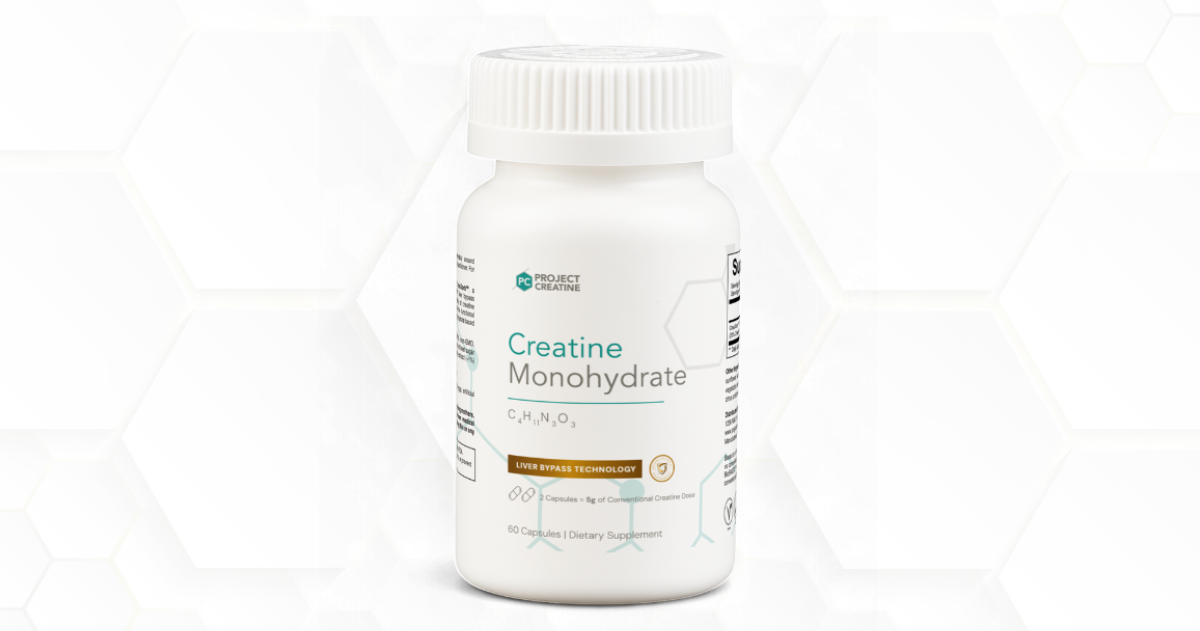
Project Creatine is designed with these standards in mind. Formulated specifically for daily use in both cognitive and physical performance contexts, it uses pharmaceutical-grade creatine monohydrate with no unnecessary additives, making it a reliable choice whether you’re focused on athletic recovery or supporting brain bioenergetics through periods of sleep deprivation and brain fog. When evaluating the best creatine monohydrate brand in 2026 for brain health, prioritize transparency, third-party verification, and consistent daily dosing over marketing claims about exotic forms.
Project Creatine’s serving size should also not be described as providing the same literal gram dose used in conventional creatine studies. Research involving its delivery technology may support differences in absorption or systemic exposure, but this does not automatically establish equivalent brain-creatine accumulation or equivalent cognitive outcomes.
Sleep deprivation is a state of insufficient restorative sleep, in duration, quality, or both, that impairs cognitive, emotional, and physical function. Even a single night of poor sleep measurably reduces cognitive performance.
Creatine may help preserve selected aspects of cognitive performance during sleep deprivation or prolonged mental effort, but it has not been established as a general treatment for brain fog.
Many studies use conventional creatine monohydrate at daily doses of 3–5 g, while sleep-deprivation studies have sometimes used much higher loading or acute doses. The optimal dose and duration for brain outcomes have not been established.
Headaches, nausea, appetite changes, and lightheadedness can accompany insufficient sleep, but these symptoms have many potential causes and should not automatically be attributed to sleep deprivation.
Poor sleep may occur alongside stress-related hair shedding, but hair loss has many possible nutritional, hormonal, medical, and genetic causes. Persistent or unexplained shedding should be evaluated by a qualified healthcare professional.
Creatine monohydrate is the form used in most cognitive and athletic research. Look for transparent labeling, documented quality standards, and a product that can be used consistently. Project Creatine uses creatine monohydrate in a specialized delivery system, but the finished product has not been directly evaluated in the sleep-deprivation studies discussed above.

Evidence-based creatine guidance