Creatine is one of the most researched and widely used supplements in the world. From athletes to everyday fitness enthusiasts, many people use creatine to support strength, exercise performance, recovery, and muscle health. But as creatine has grown in popularity, the number of available formats has grown too. Beyond traditional powders, today’s options include:
This variety creates a simple question:
What makes creatine monohydrate capsules different from other forms of creatine?
The answer is not that capsules are automatically better for everyone. Most high-quality creatine products are designed to deliver the same active ingredient: creatine. The difference usually comes down to convenience, serving format, portability, and how easily the product fits into your daily routine.
For many users, creatine monohydrate capsules offer a practical way to stay consistent without measuring powders, mixing drinks, or carrying a scoop.
Creatine monohydrate is the most studied form of creatine available today. Creatine is a naturally occurring compound produced by the body from amino acids and stored mainly in skeletal muscle, where it helps support energy production during short, high-intensity activities. During demanding efforts like weight training, sprinting, jumping, or repeated bouts of intense exercise, the body uses adenosine triphosphate, or ATP, as a primary energy source for muscle contractions.
Creatine helps regenerate ATP by increasing stored phosphocreatine levels inside muscle cells, a process that ultimately supports improved strength output, better overall training performance, increased exercise capacity, and lean muscle development. While the body naturally produces creatine and small amounts can be absorbed through dietary sources like meat and fish, supplementation allows users to increase creatine availability far beyond normal dietary intake. This significant boosting capability is why creatine monohydrate remains the preferred choice among both researchers and fitness professionals.
Among all types of creatine, creatine monohydrate has the strongest scientific foundation. Decades of research have examined its effectiveness, safety, long-term use and performance benefits
Research consistently supports creatine monohydrate as an effective supplement for improving strength and supporting muscle performance when combined with resistance training. Unlike many newer forms that rely heavily on marketing claims, creatine monohydrate has extensive evidence behind it.
This makes it a popular choice for:
Interest has also grown around creatine for men & women over 40, as maintaining muscle mass becomes increasingly important with age.
Today’s supplement market offers several creatine formats. Each format has unique characteristics based on user preferences and lifestyle needs.
Creatine powder remains one of the most common and popular forms of creatine available. Its primary benefits include easy dosage adjustment, high cost efficiency, and simple mixing with water or protein shakes. Many users prefer powder because it allows complete flexibility in customizing serving sizes. However, some people find measuring out powder inconvenient, particularly when traveling or maintaining a busy, on-the-go schedule.
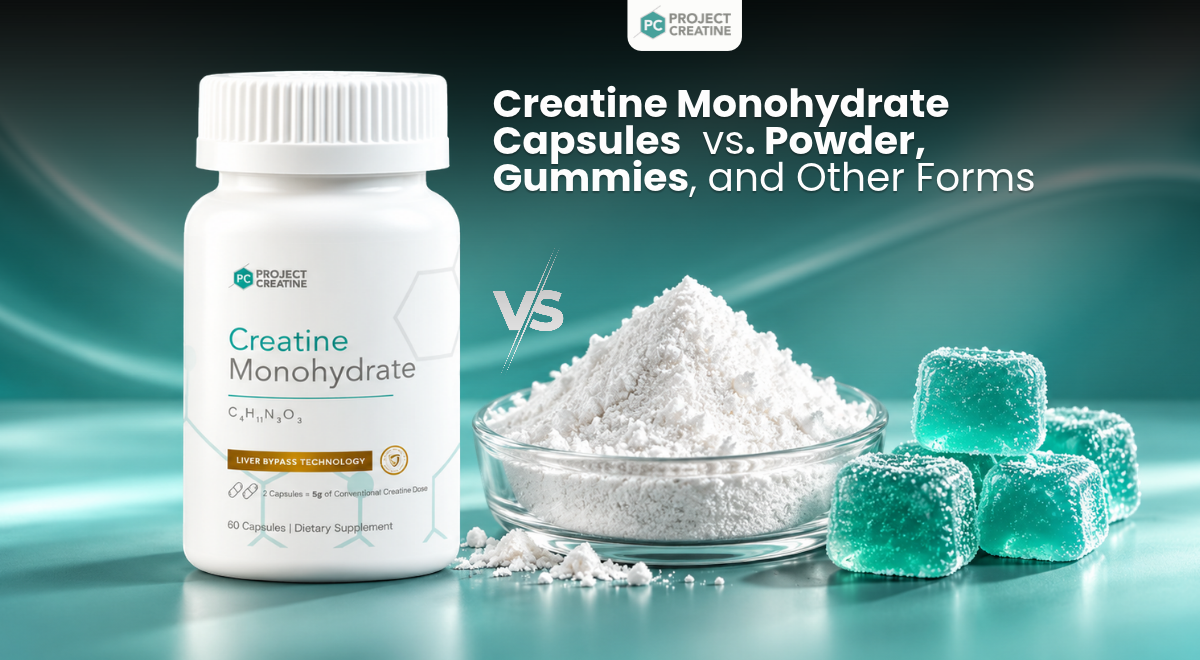
Creatine capsules provide creatine in a pre-measured format, allowing users to take their daily serving without measuring powder. Each serving delivers a set amount of creatine, which may help users maintain a more consistent routine. Capsules also fit easily into gym bags, work bags, or travel luggage and require no mixing, shaking, or prep work. This makes them a practical option for anyone who wants a simple daily creatine routine without compromising on creatine monohydrate quality.
Creatine gummies have grown in popularity because they offer a flavored, portable, and easy-to-consume format. However, gummies may include additional ingredients such as sweeteners, flavors, colors, or added sugars. Whether gummies are the right choice depends on personal preference, dietary goals, serving size, and how consistently someone will use them.
Beyond monohydrate, consumers may encounter products marketed as creatine hydrochloride, or HCl, buffered creatine, liquid creatine, or other specialty formulas. These options may differ in format, taste, solubility, or marketing claims, but creatine monohydrate remains the most extensively researched form. When comparing products, focus on ingredient quality, serving size, label transparency, and whether the format fits your routine.
The popularity of creatine monohydrate capsules continues to increase because they solve some common challenges users experience with powdered supplements.
One of the biggest advantages of capsules is simplicity. Each serving provides a measured amount of creatine, which may help users avoid:
Consistency matters because creatine works over time by helping increase and maintain muscle creatine stores.
Many people know they should take creatine but struggle with maintaining a routine. Capsules make supplementation easier because they can become part of existing habits.
For example:
A supplement routine is only effective when people can maintain it.
For frequent travelers or busy professionals, capsules provide a major convenience advantage.
There is no need to carry:
This makes creatine capsules practical for people who want consistency anywhere.
Some users enjoy mixing creatine into:
However, others prefer avoiding preparation. Capsules provide a straightforward alternative.
Choosing between creatine capsules and powder comes down to personal preference, budget, and daily routine. Powder may work well for people who already use protein shakes, prefer flexible serving sizes, or want maximum cost efficiency. Capsules may be a better fit for people who travel often, prefer pre-measured servings, or want to avoid mixing supplements into liquids. When the same amount of creatine monohydrate is taken consistently, both formats can support similar creatine benefits. The most important factor is choosing the format you can use consistently.
Creatine remains popular among people involved in strength and performance training because it supports high-intensity exercise.
As people age, maintaining muscle strength becomes increasingly important. When combined with exercise and proper nutrition, creatine may support:
Muscle maintenance
Strength training progress
Healthy aging routines
People with demanding schedules often choose capsules because they require minimal preparation.
Many beginners ask: Should you take creatine?
For healthy adults interested in supporting exercise performance and muscle health, creatine is one of the most researched supplement options available.
Many users focus on choosing the right creatine product but overlook the habits that make supplementation easier to maintain.
Common creatine mistakes include:
Creatine works best when taken regularly. Skipping frequently can make it harder to maintain optimal muscle creatine levels.
More creatine does not automatically mean better results. Most users can support creatine stores with a standard daily serving taken consistently.
Understanding creatine hydration is important. Creatine increases water storage inside muscle cells, making adequate fluid intake important, especially for active individuals.
Creatine is not an instant stimulant. Benefits develop through consistent use over time.
The body uses the same active ingredient regardless of format. The difference is mainly convenience and delivery method.
Concerns about whether creatine causes kidney stones are common. Current research does not show that recommended creatine use causes kidney stones in healthy individuals. People with kidney disease, existing medical conditions, or questions about supplement use should consult a healthcare professional.
Creatine does not require cycling for most healthy users. Many people use it consistently as part of their long-term fitness routine.
Choosing a creatine supplement is ultimately about finding a product that fits your lifestyle. Project Creatine is built around one ingredient — creatine monohydrate — with a focus on quality, convenience, education, and consistent daily use. For users who prefer simplicity, Project Creatine creatine monohydrate capsules provide an easy way to include creatine in a daily routine without measuring powders, mixing drinks, or carrying extra prep tools.
Creatine monohydrate remains the most researched form of creatine, and different formats give users options based on preference, lifestyle, and routine. Whether you choose powder, gummies, tablets, or capsules, the most important factors are ingredient quality, appropriate serving size, and consistency. Capsules stand out because they offer convenience, pre-measured servings, and easy portability. For people looking for a simple daily creatine routine, Project Creatine provides a convenient creatine monohydrate capsule option built for consistency.
Creatine monohydrate is the most researched form of creatine. It helps support ATP production, muscle energy, strength, and exercise performance.
Yes. Creatine capsules and powder can provide similar benefits when they contain the same amount of creatine monohydrate.
Common types include creatine monohydrate, micronized creatine, creatine HCL, and other specialty formulas. Creatine monohydrate has the strongest research support.
Creatine does not directly burn fat, but it may support training performance and muscle maintenance during a weight-loss program.
Teenagers should discuss supplement use with a qualified healthcare professional, especially when considering long-term use.
Research does not show that creatine causes dehydration. Proper hydration remains important for active individuals.
Yes, many people consume creatine with coffee. The key factor is consistent daily intake.
Creatine timing is less important than regular daily use. Consistency matters most.

Evidence-based creatine guidance