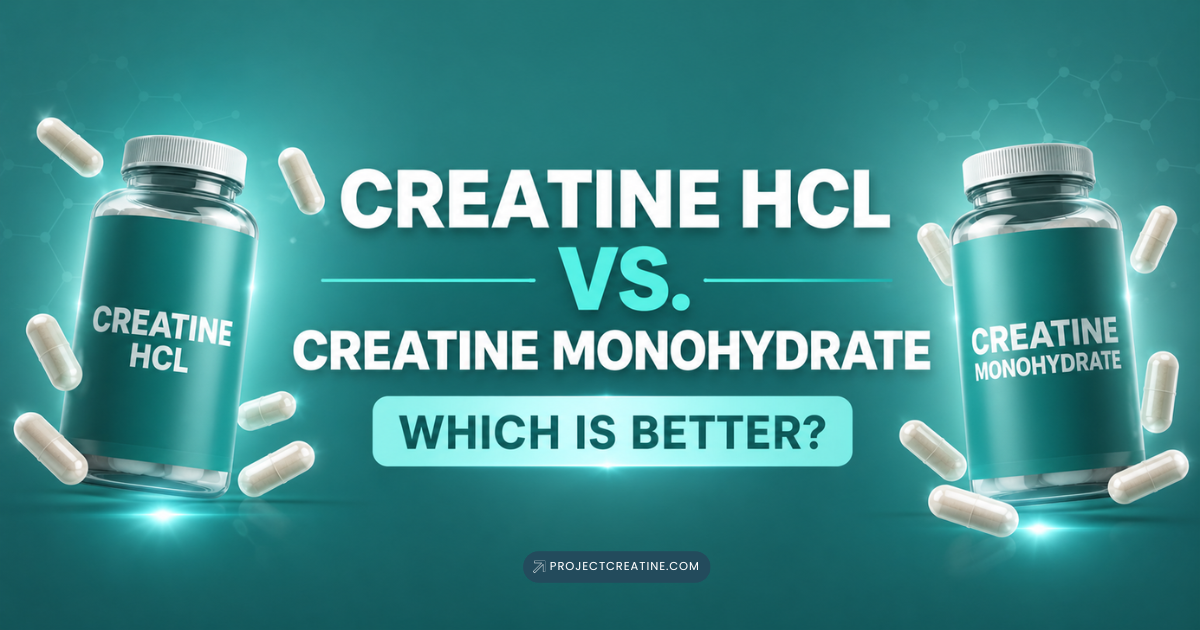
If you are comparing creatine forms, the real question is not which one sounds newer. It is which one gives you the best combination of evidence, daily usability, and long-term value? That is why the comparison between Creatine HCL and Creatine Monohydrate keeps coming up. Both are marketed as performance-focused options, but they are not equally supported by research. Current guidance and review literature continue to treat creatine monohydrate as the reference form because it has the strongest evidence base for efficacy, safety, and practical dosing.
For Project Creatine, that matters because buyers are not only asking what works in the gym. They are also asking what fits a daily routine, what supports healthy aging, and what feels like a premium product rather than just another tub or generic creatine capsule. A better creatine routine is not built on hype. It is built on consistent intake, clear dosing, and a form that has real clinical weight behind it.
Creatine has become a much broader wellness conversation than it used to be. People are no longer looking at it only through the lens of gym performance. They are also asking how it fits into daily routines, long-term health goals, and more premium supplement choices. That is what makes the comparison between Creatine HCL and Creatine Monohydrate so relevant today. It is not just about novelty. It is about choosing the form that offers the strongest evidence, the most practical use, and the most value over time.
Creatine helps support the phosphocreatine system, which regenerates adenosine triphosphate, or ATP, the immediate energy source your cells rely on. This is why creatine is so closely linked to repeated high-intensity muscular effort. It helps maintain energy availability during short bursts of demanding work. That same energy support extends beyond muscle tissue, including the brain, where energy turnover is also important.
This is one reason creatine has moved beyond traditional sports nutrition conversations. It is now being discussed in relation to strength, recovery, cognitive function, and creatine for healthy aging.
Creatine HCL, or creatine hydrochloride, is a form of creatine bound to hydrochloric acid. It is often marketed as more soluble in water and easier on digestion. Brands that sell it usually highlight smaller serving sizes and less bloating as key benefits. These claims make it sound attractive, especially to users who want something that feels more advanced than standard creatine monohydrate.
The problem is not that Creatine HCL is automatically ineffective. The problem is that it lacks the same depth of clinical evidence as Creatine Monohydrate. In supplement categories like creatine, marketing language often moves faster than the research. That is why the strength of evidence matters so much when comparing forms.
Creatine Monohydrate is the most extensively studied form and remains the reference standard in clinical and sports nutrition literature. It has decades of evidence supporting increased intramuscular creatine stores, enhanced high-intensity performance, and a strong safety profile in healthy adults when used appropriately.
That is exactly why it continues to dominate serious conversations about creatine. It is not just familiar. It is proven. If you are looking for a premium creatine monohydrate option, the smartest move is usually to start with the form with the strongest body of evidence rather than the one making the loudest claims.
Most creatine products do not fall short because the ingredient is weak. They fall short because the product is underdosed, inconvenient, or poorly explained. In that sense, the creatine category has an adherence problem more than an ingredient problem. This is especially important when a product is meant to be taken daily.
That is where monohydrate keeps winning. It is simple, well understood, and backed by dosing patterns that are practical for real life. For most healthy adults, the standard maintenance range remains about 3 to 5 grams per day. The smarter question is not whether the label sounds innovative. It is whether the routine is sustainable.
Also Read: How to Choose the Best Creatine Monohydrate Brand in 2026?
| Factor | Creatine HCL | Creatine Monohydrate |
|---|---|---|
| Research depth | More limited | Strongest evidence base |
| Industry standard | No | Yes |
| Solubility marketing angle | Often promoted as higher | Well established, especially in practical use |
| Safety and efficacy data | Less extensive | Extensive across decades |
| Use in healthy aging research | Less central | Frequently discussed |
| Use in cognition research | Less central | More commonly studied |
This is really the heart of the comparison. Creatine HCL may appeal to people looking for a newer label, but Creatine Monohydrate remains the form with the strongest evidence for performance, safety, and broader health-related use. That includes areas such as creatine for healthy aging and cognition, where monohydrate is far more commonly studied.
There is no strong evidence showing that Creatine HCL consistently outperforms Creatine Monohydrate in meaningful real-world outcomes. That is the point many buyers miss. A product can sound more refined without actually being better supported. In supplements, being newer and being better are not the same thing.
Monohydrate remains the better-supported choice because the evidence is stronger, broader, and more clinically useful. It has been studied in athletic settings, general adult populations, and older adults. It is also the form most often discussed in the growing literature around brain function and healthy aging.
When it comes to creatine for healthy aging, the monohydrate form has the stronger case.Reviews in older adults continue to discuss creatine monohydrate as a clinically relevant strategy to support muscle mass, strength, physical function, and address age-related performance concerns, especially when combined with resistance training.
That matters because the healthy ageing conversation is no longer only about muscle. It is also about independence, resilience, and energy support across daily life. If you have already published or plan to publish content around creatine for healthy aging, this blog links naturally to that topic because it reinforces why monohydrate remains the most practical evidence-based choice.
Interest in creatine is expanding well beyond physical performance. A 2024 systematic review and meta-analysis reported that current evidence suggests creatine monohydrate supplementation may confer modest benefits to certain aspects of cognitive function, particularly under conditions of stress or sleep deprivation. This does not mean creatine should be oversold as a miracle brain supplement, but it does support the growing interest in creatine for brain health.
That is another place where monohydrate stands out. The brain-energy discussion is still developing, but the form appearing in the better-known literature is monohydrate, not HCL.
If you want a more practical daily creatine routine, take a closer look at Project Creatine.
A premium product should do more than just list creatine on the label. It should make daily use easier, improve confidence in the formula, and remove friction from the routine. That is where premium creatine monohydrate has a real advantage over trend-led alternatives. It combines the strongest evidence base with the most practical path to consistent use.
This is also why the phrase best creatine monohydrate brand naturally connects here. When buyers compare products seriously, they are not just comparing creatine forms. They are comparing reliability, usability, and the brand’s understanding of what actually drives results over time. That is the difference between a commodity supplement and a thoughtfully designed daily product.
If the choice is between Creatine HCL and Creatine Monohydrate, monohydrate is still the better overall option for most people. It has the strongest research support, the clearest practical guidance, and the broadest relevance across performance, cognition, and creatine for healthy aging. HCL may still appeal to some buyers, but it does not currently match monohydrate in depth of evidence or real-world confidence.
For people who want something more premium than a generic powder, the best move is not to chase novelty. It is to choose a premium creatine monohydrate product that supports consistency, clarity, and daily use. That is where Project Creatine fits naturally.
If you are ready to choose a better daily creatine routine, start with Project Creatine.
For most people, no. Creatine Monohydrate remains the better-supported option because it has the strongest clinical evidence for safety, performance, and long-term use.
Creatine HCL is often promoted as the better option for bloating, but the evidence does not clearly show that it outperforms creatine monohydrate in real-world use.
For most people, bloating is more likely to depend on serving size, product quality, and how creatine is introduced into the routine. Since creatine monohydrate remains the most researched form, it is still the more reliable choice for people who want proven results and a stronger evidence base.
Yes, a creatine capsule can be effective if the total daily dose is appropriate and taken consistently. The best format is often the one that supports adherence.
Yes, it is increasingly discussed in the literature on creatine and healthy aging, particularly regarding muscle strength, physical function, and resilience in older adults.
Look for clear labeling, practical daily dosing, a routine-friendly format, and a brand that prioritizes usability and trust over novelty alone. Evidence and consistency should come before hype.
Evidence-based creatine guidance