If you have ever stepped foot in a gym or browsed a fitness forum, you have likely heard of creatine. It is one of the most popular and widely studied supplements on the planet. Whether you’re a beginner or an experienced athlete, understanding how creatine works can help you make better decisions for your health and performance.
Let’s scientifically break down everything about creatine monohydrate, including how it works, benefits, proper dosage, and the safest way to use it.
Creatine is a natural substance which is present in your muscles. Three amino acids, namely arginine, glycine, and methionine, are used to prepare it. It is naturally produced by your body, and you also obtain it in small quantities in such foods as meat and fish.
Nevertheless, to enhance performance and muscle strength, creatine monohydrate supplement is used by a large number of individuals in order to boost the creatine concentrations in their body.
Here’s how it works at a physiological level:
| Component | Description |
| Creatine Molecule | Supports rapid ATP regeneration in muscle cells |
| Water Molecule | Enhances stability and absorption |
| Structure | Simple and highly bioavailable |
| Effectiveness | Most reliable form of creatine |
Creatine Monohydrate supports the rapid regeneration of ATP (adenosine triphosphate), the primary energy currency used during high-intensity exercise, enabling sustained performance during repeated bouts of effort rather than simply “boosting energy.”
Energy Starts with ATP (Energy) → Energy Used → ADP Formed → Creatine Helps → ATP Recreated → Energy Again
Here’s a simple step-by-step breakdown:
Your body uses ATP (Adenosine Triphosphate) as its main source of energy for muscle movement, especially during intense activities like lifting weights or sprinting.
In high intensity exercise, ATP decomposes at a high rate to release energy. But your muscles can only store ATP only up to a few seconds.
After the consumption of ATP, it loses a phosphate group and becomes ADP (Adenosine Diphosphate) which is less energetic.
Best creatine monohydrate “donates” a phosphate group to ADP, helping convert it back into ATP.
This quick regeneration of ATP helps “recharge the battery” of your muscle cells during a workout with a fresh supply of energy almost instantly.
As a result, creatine supplementation supports increased training capacity, improved performance output, and reduced fatigue over time during repeated high-intensity efforts.
Also Read: How to Choose the Best Creatine Monohydrate Brand in 2026?
Now that you understand how best creatine monohydrate works, let’s explore the key benefits of creatine. Its benefits extend far beyond just looking “bulky.”
One of the biggest reasons people use creatine for muscle growth is its ability to increase muscle size. It supports muscle size primarily through increased cellular hydration and improved training capacity rather than directly increasing muscle protein synthesis.
It assists in drawing more water to the muscle cells, a process called “cell volumization.”
The enhanced ATP synthesis is the reason behind why creatine monohydrate supplement enables you to perform better in brief periods of vigorous activity such as lifting or running fast.
Studies have shown that users see improvements in strength and power output over time, particularly during structured resistance training.
Regular intake of creatine can enable you to train with greater volume and intensity, which contributes to long-term performance adaptations.
Creatine supports recovery by influencing cellular energy availability and markers of muscle stress though outcomes can vary depending on training intensity and individual response.
Emerging research highlights creatine’s role in supporting cognitive performance, particularly in conditions involving mental fatigue, sleep deprivation, and high cognitive demand. This makes it relevant not only for physical performance but also for sustained mental output
The brain uses nearly 20% of the body’s total energy (ATP), which explains why supporting ATP availability through creatines help maintain mental performance in high-demand states rather than acting as a direct “brain booster.”
Consistency is important when it comes to dosage.
However, many people skip the “loading phase” and still get great results with daily use of creatine.
Properly taking creatine may enhance its performance.
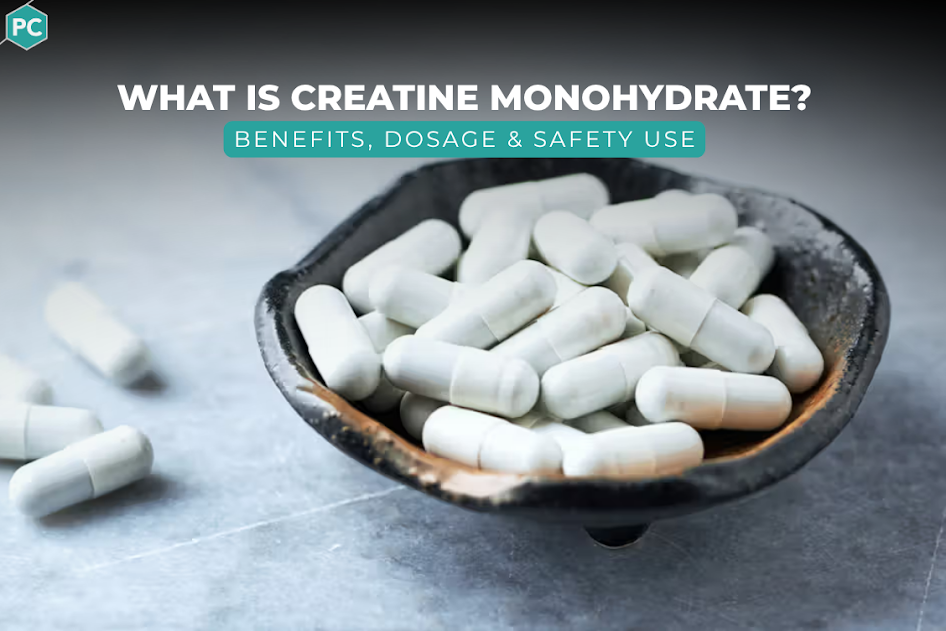
You may use it in form of powder or creatine monohydrate capsules. Capsules are more convenient, whereas powder is affordable.
Adequate hydration supports normal physiological function when supplementing with creatine and helps maintain overall balance during training
Current evidence suggests that consistency of daily intake is more important than specific timing.
Regular use is the most significant consideration. Daily intake ensures your muscles stay saturated with creatine for muscle growth .
Let’s look into some Do’s and Don’ts to get the maximum benefits out of it-
 Do:
Do:
 Don’t:
Tip: It is advisable to keep creatine monohydrate capsules in your gym bag in order to take every dose.
Not all creatine supplements deliver the same experience or results. Differences can come down to:
Advanced delivery systems are being developed to improve consistency, absorption pathways, and user adherence. Still confused about how to choose the right one?
Read the full guide on how to choose the best creatine brand in 2026 to understand what actually matters.
Safety is often a concern for beginners, but the reality is that creatineis one of the safest performance supplements on the market. Extensive clinical research across diverse populations indicates no significant long-term adverse effects in healthy individuals when used within recommended dosages.
With adequate hydration, the chances of getting negative health effects are very low provided you take the recommended dosages.
While it is safe, some individuals might have slight side effects particularly when they overdose. These can include:
Tip: Some people have a problem with stomach problems when taking powder, so sometimes changing to creatine monohydrate capsules can resolve this problem, as they may improve convenience and consistency.
You don’t have to be a bodybuilder to benefit from this. While it is widely used for creatine for muscle growth, its benefits apply to a wide range of people.
Basically, if you move your body and want to feel more energetic and stronger, using best creatine monohydrate for muscle growth and overall vitality is a smart choice.
Creatine monohydrate is a safe, effective and science-supported supplement to any individual who wants to enhance his or her physical performance.
When you use creatine for muscle growth, you are supporting your body’s ability to regenerate ATP, improve training capacity, and sustain performance over time rather than relying on short-term effects.
It remains one of the most clinically validated and cost-effective supplements for long-term performance support when used consistently and appropriately.
If you’re looking for high-quality and reliable products, Project Creatine offers premium options designed to support your goals. We believe in transparency, purity, and results. Join the Project Creatine community today and experience the difference that premium nutrition can make in your fitness journey.
Start smart, stay consistent, and let your fitness journey reach the next level with Project Creatine!
Absolutely. Creatine monohydrate is the best option, especially in case you are new. It is widely considered safe as long as you stick to the recommended dose of about 3 to 5 grams per day. Since it’s one of the most studied supplements in the fitness world, there is a lot of data to back up its safety.
Yes, consistency is key. You should also take it every day (even during rest days) in order to maintain your muscle levels where they should be. The amount of 3-5 grams of it taken regularly keeps your muscles saturated, and it is in this way you benefit most by it.
Both of them are equally good and it actually depends on your lifestyle. Powder tends to be cheaper and is simple to carry out when you are at home. Capsules on the other hand are far more convenient when you are traveling or on the go.
Research findings indicate that it is not harmful to long-term use especially when taken correctly. The primary consideration is to make sure you are well-hydrated; you should combine your supplement with lots of water so that your body could process it appropriately.
You may have it at any hour of the day. Nevertheless, lots of individuals are fond of using it after the workout to ensure its improved absorption and to be able to recover.

Evidence-based creatine guidance