
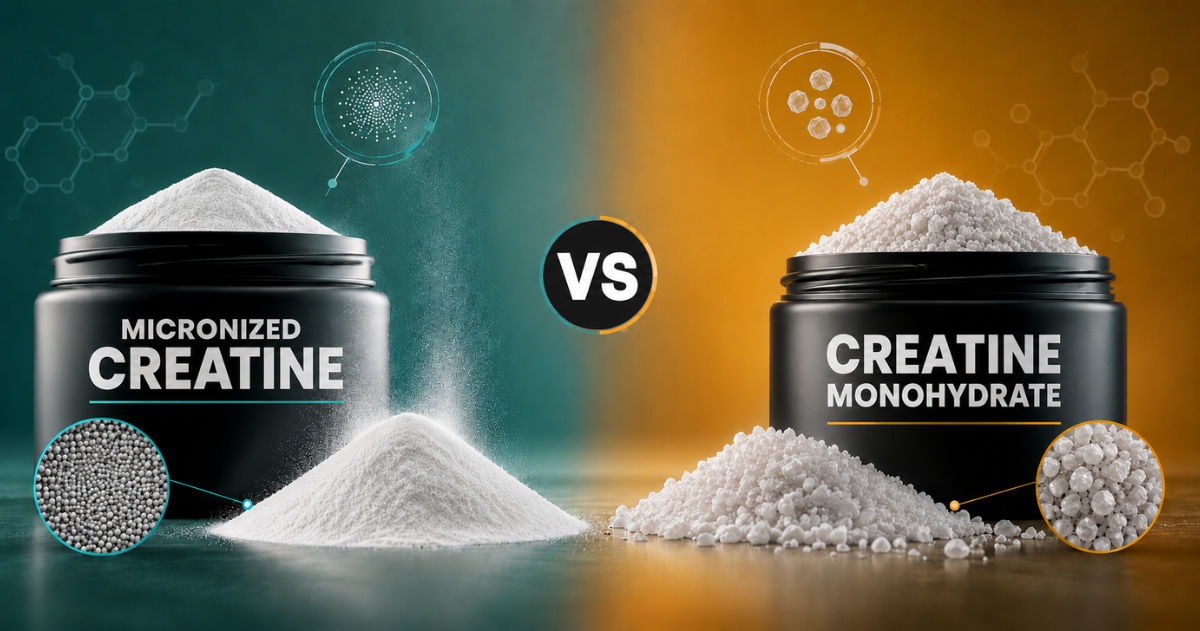
Creatine monohydrate is the most researched and widely used form of creatine. Micronized creatine is not a different type of creatine — it is creatine monohydrate that has been processed into smaller particles to improve how it mixes in liquid. In other words, the biggest difference is texture and mixability, not performance. Both forms can support strength, power, lean muscle, and recovery when taken consistently.
The truth is that micronized creatine is not a new compound; it is the same creatine monohydrate, processed into finer particles to improve solubility and mixability. For many users, the differences are more about convenience than performance. Creatine may also support brain energy and cognitive performance, especially during periods of high mental demand, aging, or sleep deprivation. This article breaks down the differences, similarities, and practical considerations to help you choose the right supplement for your goals.
Creatine monohydrate is the original and most extensively studied form of creatine supplementation. The molecule consists of one creatine unit bound to a water molecule; it is naturally produced by the liver, kidneys, and pancreas and is also found in dietary sources such as red meat and fish. About 95% of the body’s creatine is stored in skeletal muscle, where it plays a crucial role in regenerating ATP, the primary energy source for short bursts of high-intensity activity.
Clinical research consistently demonstrates that creatine monohydrate improves strength, increases power output, enhances lean muscle mass, and supports recovery between intense training sessions. It remains the most reliable and affordable option for both novice and professional athletes It remains the most reliable, affordable, and extensively studied form of creatine for athletes, active adults, and everyday users.
Micronized creatine is simply creatine monohydrate that has been mechanically processed into smaller particles. These smaller particles improve solubility in water and reduce sediment in drinks, making the supplement easier to consume and mix. For some users, micronized creatine also provides a smoother experience that may be gentler on the digestive system, though clinical research indicates that digestive discomfort is more often related to excessive doses, poor hydration, or individual sensitivity rather than the particle size itself.
Importantly, the chemical structure remains identical to that of the standard monohydrate. The benefits to strength, muscle growth, or cognitive support are unchanged, meaning micronized creatine offers convenience rather than superior performance. For a broader breakdown, read our guide to the different types of creatine.
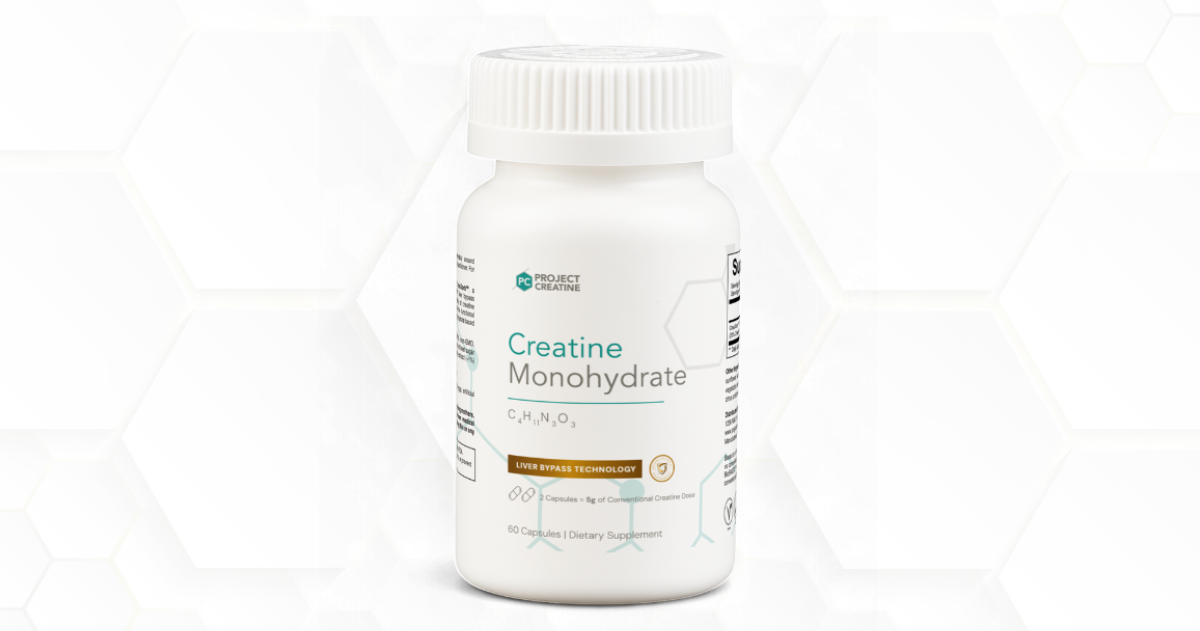
Looking for a clean, easy-to-use creatine monohydrate formula designed for daily consistency?
When comparing micronized creatine vs creatine monohydrate, the most noticeable difference is particle size. Micronized creatine is processed into smaller particles, which can help it disperse more easily in liquid and reduce the gritty texture some users dislike. Standard creatine monohydrate dissolves less readily, which may leave visible sediment.
Other practical distinctions include:
The International Society of Sports Nutrition (ISSN), has consistently recognized creatine monohydrate as one of the most effective and well-supported ergogenic supplements for increasing high-intensity exercise capacity and lean mass during training.
Both creatine monohydrate vs micronized creatine provide the same ergogenic benefits. Because micronized creatine is still creatine monohydrate, the expected performance benefits are the same when total daily intake is matched. Muscle creatine saturation depends more on consistent dosing over time than on whether the powder is micronized.
Muscle adaptation depends primarily on total daily intake and consistency. Without a loading phase, many users build up muscle creatine stores over several weeks of daily use. With a loading phase, saturation can occur faster, but daily consistency matters most.
Additionally, creatine supports cognitive health. Creatine also plays a role in brain energy metabolism. Emerging research suggests it may support certain aspects of cognitive performance, particularly during sleep deprivation, aging, or other high-demand states. However, the cognitive benefits are still being studied and should be positioned as promising rather than guaranteed.
Micronized creatine is ideal for users who value convenience, mixability, and taste experience. Those who frequently mix creatine in shakes or prefer a smoother texture may find micronized creatine easier to incorporate into their routine. It is also a practical choice for users who experience mild digestive discomfort with standard creatine powders.
For most users, standard creatine monohydrate remains the preferred choice. It delivers the same performance benefits as micronized creatine but at a lower price per gram. Athletes and active adults focused on strength, lean mass, and recovery will usually do well with premium creatine supplements because it is proven, affordable, and widely studied. For older adults and women over 40, creatine may be especially relevant because it can support lean mass, strength, and cellular energy demands when paired with resistance training and adequate protein..
Some believe that smaller particle size accelerates absorption. In reality, muscle saturation is driven by dose, consistency, and body mass rather than particle size. Both forms can deliver similar results when taken consistently, and there is no strong evidence that micronized creatine produces faster strength, muscle, or recovery outcomes.
Both forms of creatine are safe when used as directed. Mild effects may include temporary water retention or bloating in sensitive individuals. These can be mitigated by:
Extensive research does not show kidney or liver damage in healthy adults using recommended amounts of creatine. Anyone with kidney disease, liver disease, or a medical condition should speak with a healthcare professional before supplementing.
When comparing micronized creatine vs creatine monohydrate, the science is clear: both forms deliver identical performance outcomes. Micronized creatine is easier to mix and may be more comfortable for digestion, but it does not outperform standard monohydrate in clinical research.
For most users seeking strength, lean muscle, and recovery benefits, creatine monohydrate remains the gold standard. Those prioritizing convenience and mixability may consider micronized creatine. Project Creatine uses a modern delivery approach designed for convenience, consistency, and daily use — helping users make creatine part of their routine without overcomplicating supplementation.
It offers better mixability and a smoother texture, but performance outcomes are identical to those of standard monohydrate.
Micronized creatine may mix better in liquid, but better mixability does not necessarily mean better absorption or better results. Once consumed consistently, both micronized and standard creatine monohydrate can support similar outcomes.
Yes. The chemical composition is identical; only particle size differs.
Yes. Creatine monohydrate, including micronized creatine, is well studied and generally considered safe for healthy women when used at recommended doses, typically 3–5 grams per day.
Some users experience mild water retention, but staying hydrated and splitting doses can help.
Both micronized and standard monohydrate are safe and effective for beginners.
Women should take creatine monohydrate, ideally in a micronized form. It is the most studied, cost-effective, and safe form of creatine. It supports muscle strength, exercise recovery, and cognitive function.
Micronized and regular creatine monohydrate are equally effective. Micronized creatine simply mixes better and may be easier on the stomach.

Evidence-based creatine guidance