
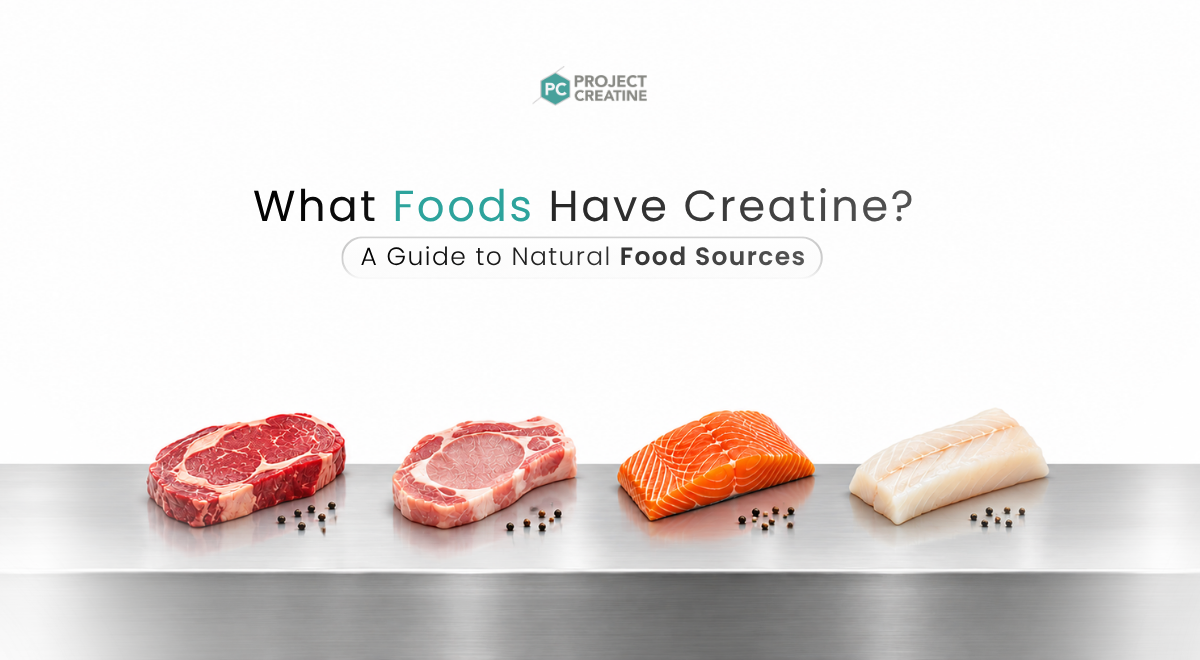
Creatine occurs naturally in animal-based foods, particularly meat and fish. Herring, beef, pork, salmon, tuna, and poultry are common dietary sources, while most plant foods contain little to no meaningful creatine. If you are wondering what is creatine, it is a compound your body naturally makes and stores mainly in muscle tissue to help supply energy. Creatine monohydrate is one of the most widely studied forms used in supplements.
If you want to increase your creatine intake through food, knowing which foods contain the most can help. This guide covers natural sources of creatine, foods high in creatine, how cooking can affect their creatine content, and how food compares with creatine supplements.
The main dietary sources of creatine are meat and fish because creatine is stored in animal muscle tissue. Herring can contain around 6.5–10 g of creatine per kilogram of raw food. Pork contains about 5 g/kg, while beef and salmon contain around 4.5 g/kg. Tuna, chicken, and cod also provide creatine. The exact amount varies with the type of food, the cut or species, and how the food is prepared.
Fish and meat are the main natural sources of creatine.
Herring is among the foods with the highest measured creatine content.
Plant foods contain little or no meaningful creatine.
Food can contribute to daily creatine intake, but a normal diet usually provides less creatine than a standard supplement serving.
The following figures give approximate creatine content in raw food per kilogram. Values can vary between studies and individual foods, so treat them as useful ranges rather than exact numbers.
Food | Approx. creatine per kg of raw food | Approx. creatine per 100 g |
Herring | 6.5–10 g | 0.65–1.0 g |
Pork | ~5 g | ~0.5 g |
Beef | ~4.5 g | ~0.45 g |
Salmon | ~4.5 g | ~0.45 g |
Tuna | ~4 g | ~0.4 g |
Chicken | ~4 g | ~0.4 g |
Cod | ~3 g | ~0.3 g |
Milk | ~0.1 g | ~0.01 g |
Values are approximate and represent reported creatine concentrations in raw foods. Actual amounts vary by species, cut, preparation, and cooking method. Sources: Published food-composition research and Reviews in Aquaculture (2023).
Herring sits near the top of most food lists. A 200 g portion of raw herring could contain roughly 1.3–2 g of creatine based on these published ranges. A similar amount of beef or salmon would provide around 0.9 g before cooking.
These numbers show the foods with highest creatine are mainly meat and fish. They also show why getting several grams of creatine from food requires eating a substantial amount of animal-based food.
Creatine occurs naturally in several animal-based foods, but the amount can vary considerably between food groups, species, and cuts.
Fish provides some of the highest concentrations of dietary creatine. Herring, salmon, tuna, cod, hake, and other fish contain creatine because the compound occurs naturally in muscle tissue. Herring can contain substantially more than many other commonly eaten fish.
Beef and lamb are useful natural sources of creatine. Beef contains around 4.5 g/kg in some published food tables, while lamb can also contain several grams per kilogram. The amount varies between cuts and animals.
Pork and poultry are natural sources of creatine. Reported concentrations vary by species and cut, but both contribute to dietary creatine intake.
Dairy products contain much smaller amounts of creatine. Published food-composition data list milk at approximately 0.1 g/kg, making it a minor source compared with meat and fish.
Most plant foods contain little to no meaningful creatine. This means people who avoid meat and fish generally get less dietary creatine than people who eat an omnivorous diet. Your body still makes creatine internally, so avoiding animal foods does not mean your body stops producing it.
Research has found differences in creatine status between vegetarian and omnivorous diets. One randomized trial found that switching from an omnivorous diet to a vegetarian diet reduced muscle and plasma creatine in participants who did not receive supplementation.
This is one reason people researching creatine for vegetarians often consider supplementation. A systematic review of creatine studies in vegetarian participants found that supplementation increased muscle creatine and phosphocreatine levels, although the studies varied in their findings and quality.
A mixed diet containing meat and fish is often estimated to provide approximately 1–2 g of creatine daily, although actual intake varies considerably with food choices and portion sizes. The International Society of Sports Nutrition notes that about half of the body’s daily creatine requirement can come from food, with the rest produced by the body.
Your body also produces creatine internally, mainly through processes involving the kidneys and liver. Some research describes production at around 1 g per day. Consider the difference between food and supplements. A 200 g portion of raw beef containing about 4.5 g/kg would provide roughly 0.9 g of creatine before cooking. Reaching 3–5 g from food alone could therefore require several large servings of meat or fish.
That does not make food a poor source. It simply means dietary creatine and supplemental creatine provide different amounts. A creatine loading phase uses much larger daily amounts than most people can reasonably obtain from normal meals. The ISSN position stand describes loading protocols using around 20 g per day for 5–7 days, followed by a lower daily amount. A person can also increase muscle creatine stores without loading, although it takes longer.
Yes. Cooking can reduce the amount of creatine present in meat and fish. Research on beef and lamb has found that cooking can reduce creatine content, with some creatine converting to creatinine during heating. The amount retained varies by food, cooking method, and preparation conditions. One study in the National Library of Medicine found greater creatine conversion with certain heating conditions, while another found that cooked beef retained meaningful amounts of creatine despite the reduction.
For that reason, the table above uses raw-food figures. You should not assume that a cooked portion contains exactly the amount shown for the same weight of raw food.
Food can provide meaningful amounts of creatine, particularly through regular consumption of meat and fish. Meat and fish can help maintain your body’s creatine stores, and your body makes additional creatine internally. The question changes when you want to consume the amounts commonly used in creatine research. A regular supplement serving can provide a measured amount without requiring several large servings of meat or fish.
That can make supplementation more practical for some people, including those who eat little or no animal food. If you are asking should you take creatine, consider your diet, goals, training routine, preferences, and any personal health considerations rather than assuming everyone needs a supplement.
Vegetarians and vegans may have lower dietary creatine intake because plant foods contain little creatine. Research has also found that people following vegetarian diets can respond to creatine supplementation with increases in muscle creatine stores.
Older adults and people with specific training goals may also consider creatine, but the right choice depends on the individual. Project Creatine’s creatine monohydrate capsules provide another way to consume creatine without relying on large amounts of meat or fish.
Several misconceptions persist about creatine in food. Here are three common myths and what the research tells us.
False. Meat and fish naturally contain creatine. Supplements simply provide a more concentrated and measured source.
False. Cooking can reduce creatine and convert some of it to creatinine, but cooked meat and fish can still contain creatine.
Most plant foods contain little to no meaningful creatine. This is why diet becomes a common part of discussions about creatine for vegetarians.
So, what foods have creatine? Meat and fish provide most of the creatine found naturally in the diet, with herring, pork, beef, salmon, tuna, and poultry among the better sources. Cooking can reduce some of the creatine, so food values vary.
Have questions about creatine, dietary sources, or supplementation? Ask CreaTina, Project Creatine’s interactive educational assistant, to explore the research.
Educational disclaimer: This article provides general educational information and is not medical advice. Speak with a qualified healthcare professional about individual dietary or supplement decisions.
The main foods with creatine are meat and fish. Herring, pork, beef, salmon, tuna, chicken, and cod are among the better natural sources.
Herring is one of the foods with the highest measured creatine content, with published values around 6.5–10 g per kg of raw food.
Eggs contain very little creatine compared with meat and fish. They are not considered a major dietary source.
Most vegetables contain little to no meaningful creatine. The body can still produce creatine internally from amino acids.
It can, but reaching 5 g from food alone would require a substantial amount of meat or fish. The exact amount depends on the food, portion size, and cooking method.

Evidence-based creatine guidance