Why Delivery Matters
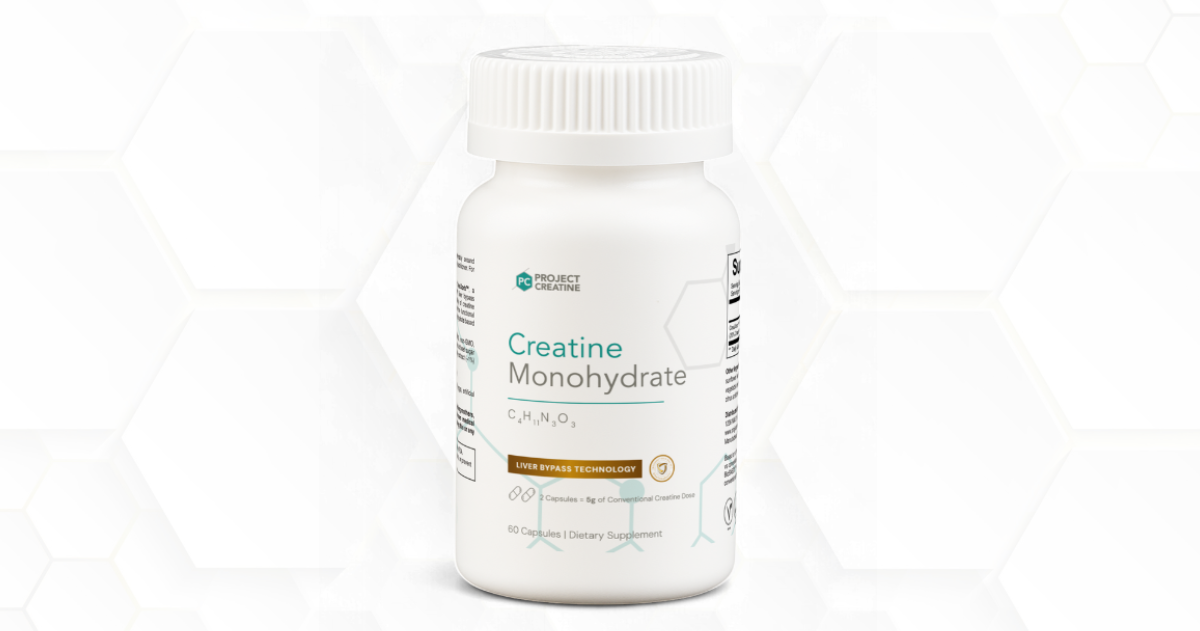
Most creatine research focuses on the ingredient itself, but delivery can also influence the user experience. Traditional powders may present challenges with mixing, convenience, daily compliance, and gastrointestinal tolerance for some individuals.
While creatine monohydrate remains the gold standard ingredient, newer delivery technologies are designed to improve solubility, convenience, and overall user adherence. For many people, especially those who do not enjoy powders, capsule-based creatine can be an easier way to maintain a consistent daily routine.
Since the benefits of creatine depend on regular daily use, the best creatine supplement is often the one you’ll actually take consistently.
Creatine for Different Age Groups and Fitness Goals
Creatine isn’t a one-size-fits-all supplement. The best creatine option can vary slightly depending on your training style, age, body composition, and fitness goals. However, for most people, creatine monohydrate remains the most effective and research-backed choice.
Best Creatine for Men
For men focused on muscle growth, strength, powerlifting, bodybuilding, or athletic performance, creatine monohydrate is the gold standard. A consistent daily intake of 3–5g is widely recommended for improving strength, recovery, and workout performance.
When choosing the best creatine monohydrate brand, prioritize products that:
- Are third-party tested (NSF Certified or Informed Sport)
- Clearly list the creatine dose per serving
- Avoid unnecessary fillers or proprietary blends
- Use micronized creatine for better mixability
Micronized creatine monohydrate is especially popular among men who want easier mixing and improved digestion.
Best Creatine for Women
Despite common myths, creatine is not “just for men.” Research shows women can benefit from creatine supplementation in many of the same ways as men, including improved strength, lean muscle support, recovery, and exercise performance.
Recent research has generated significant interest in creatine supplementation for women, particularly during perimenopause and menopause. During these stages of life, women may experience changes in muscle mass, strength, exercise recovery, and cognitive performance.
Researchers continue to investigate how creatine may support healthy aging, physical performance, and overall wellness in women across different life stages.
For many women, especially those with lower body weight, 3g daily may be enough to maintain optimal creatine stores. Know more about is creatine safe for women here and start your journey now.
Best Creatine for Older Adults (40+)
Creatine becomes even more valuable with age. After 40, maintaining muscle mass, strength, recovery, and energy levels becomes increasingly important.
Research suggests creatine monohydrate may help support:
- Muscle preservation
- Strength maintenance
- Exercise recovery
- Brain and cognitive health
Older adults often respond well to a simple maintenance dose of 3g daily without needing a loading phase.
Creatine and Healthy Aging
While creatine is often associated with athletes and gym performance, growing research suggests its benefits may extend far beyond the weight room.
Scientists continue to study creatine’s role in supporting:
- Muscle preservation
- Strength maintenance
- Physical function
- Cognitive performance
- Recovery and resilience during aging
As adults age, maintaining muscle and cognitive health becomes increasingly important, making creatine one of the most researched supplements in the healthy aging category.
Best Creatine for Endurance Athletes
Although creatine is best known for strength and power sports, endurance athletes can also benefit from supplementation — especially during sprint intervals, resistance training, or high-intensity training phases.
Creatine may help support:
- Faster recovery
- Improved training output
- Better sprint performance
- Increased muscular endurance during repeated efforts
For endurance-focused athletes, a lower maintenance dose of around 3g per day is typically effective.
Best Creatine for Teenagers
Can teenagers take creatine? Yes! For teenagers involved in sports, strength training, or high-intensity athletics, creatine monohydrate is considered the best and most researched form of creatine. When combined with proper training, nutrition, hydration, and adult supervision, creatine may help support athletic performance, strength, recovery, and muscle development in healthy teens.
Research suggests creatine monohydrate may help support:
- Improved exercise performance
- Muscle strength and power
- Training recovery
- High-intensity sports performance
Teenagers should focus on using simple, third-party tested creatine monohydrate without unnecessary additives or stimulants. In most cases, a daily maintenance dose of 3–5g is commonly used, though consulting a healthcare professional before starting supplementation is always recommended.
How to Choose the Best Creatine Brand?
With hundreds of products on the market, here’s what actually matters when picking the best creatine brand:
- Form matters first. Choose creatine monohydrate , ideally micronized for better mixability. Avoid proprietary blends that hide how much creatine is actually in the product.
- Check for third-party testing. Look for certifications from NSF International, Informed Sport, or USP. These verify that what’s on the label is actually in the product, and that it’s free of banned substances.
- Read the dose clearly. A serving should contain 3–5g of creatine monohydrate. If the label says “proprietary blend” without a specific creatine amount, skip it.
- The fewer ingredients, the better. The best creatine supplements contain creatine and little else. Avoid products loaded with artificial sweeteners, dyes, or stimulants unless you specifically want them.
- Price per gram. Creatine monohydrate is inexpensive. If a product is charging significantly more, the premium is usually marketing, not science. A good rule of thumb: expect to pay around $0.02–$0.05 per gram for quality monohydrate powder.
- Know the best way to take creatine. Consistency matters more than timing. Take 3–5g daily, every day , on training and rest days. As for the best time to take creatine monohydrate, research shows that taking it post-workout may have a slight edge, but the difference is minor. When is the best time to take creatine if you’re not training? Any time that fits your routine , just be consistent.
Project Creatine Perspective
At Project Creatine, our focus is simple: deliver scientifically backed creatine monohydrate through advanced delivery technology while providing one of the industry’s most comprehensive educational resources dedicated entirely to creatine research, performance, brain health, healthy aging, and daily wellness.
Why More People Are Choosing Creatine Capsules
While creatine powder remains the most common format, capsules continue to gain popularity among busy professionals, travelers, older adults, and individuals who simply want a more convenient way to supplement.
Capsules eliminate the need for scooping, mixing, and carrying powders while making daily supplementation simple and portable. For many people, convenience leads to better consistency, and consistency is ultimately what drives results.
Final Thoughts
Creatine is one of the most researched, effective, and versatile supplements available today. Whether your goal is improving strength, supporting recovery, maintaining muscle as you age, enhancing cognitive performance, or simply supporting long-term wellness, creatine monohydrate remains the gold standard.
As you evaluate different products, focus on what matters most:
- Clinically studied creatine monohydrate
- Transparent labeling
- Third-party testing
- A delivery format you’ll actually use consistently
The best creatine supplement is ultimately the one that combines proven science with a routine you can maintain every day.
********************************************************
Frequently Asked Questions (FAQs)
What is the best form of creatine?
Creatine monohydrate is widely considered the best form of creatine because it is the most researched, most effective, and most affordable option available. Studies consistently show it helps improve strength, muscle growth, recovery, and athletic performance.
Is creatine monohydrate the best type of creatine?
Yes. Creatine monohydrate remains the gold standard among all creatine types due to its strong scientific support, proven effectiveness, safety profile, and cost efficiency. No other form has consistently outperformed it in research.
Is creatine HCl better than monohydrate?
No. While creatine HCl may dissolve more easily in water and cause less stomach discomfort for some users, research has not shown it to be more effective than creatine monohydrate for strength, muscle growth, or performance.
When is the best time to take creatine?
The best time to take creatine is whenever you can take it consistently every day. Some research suggests post-workout may offer a slight advantage, but overall daily consistency matters more than timing.
What is the best way to take creatine?
The best way to take creatine is by consuming 3–5g of creatine monohydrate daily with water or a meal. Staying consistent with your intake is more important than using loading phases or advanced timing strategies.
How much creatine should you take daily?
Most people benefit from taking 3–5g of creatine monohydrate per day. Larger athletes or those with higher muscle mass may benefit from slightly higher doses, while beginners can start with 3g daily.
Which creatine is best for men?
Creatine monohydrate is the best creatine for men due to its proven benefits for muscle growth, strength, recovery, and athletic performance. Look for third-party tested micronized creatine from a reputable brand.
What is the best creatine supplement for women?
The best creatine supplement for women is creatine monohydrate. It supports strength, lean muscle, exercise performance, recovery, and may also benefit cognitive and bone health.
What type of creatine is best for beginners?
Micronized creatine monohydrate is ideal for beginners because it mixes easily, is well-researched, affordable, and gentle on digestion. Beginners can typically start with 3–5g daily without a loading phase.
Does creatine cause bloating?
Creatine may cause temporary water retention in some people, especially during loading phases. However, taking moderate daily doses of 3–5g usually minimizes bloating for most users.
Is creatine safe long term?
Yes. Decades of research show that creatine monohydrate is safe for long-term use in healthy individuals when taken at recommended doses.
Does creatine expire?
Yes. Creatine can expire over time, especially if exposed to moisture or heat. Most creatine supplements remain effective for several years when stored properly in a cool, dry place.
Should I take creatine before or after a workout?
Both options can be effective, but some studies suggest taking creatine after a workout may provide slightly better results for muscle recovery and growth. The most important factor is taking it consistently every day.
Does creatine cause acne?
There is currently no strong scientific evidence showing that creatine directly causes acne. However, individual responses may vary depending on hormones, diet, hydration, and overall skincare habits.
Does creatine cause weight gain?
Creatine can cause a small increase in body weight due to increased water retention inside muscle cells. Over time, it may also support lean muscle growth, which can contribute to healthy weight gain.
Can you put creatine in coffee?
Yes. Creatine can be mixed into coffee, although extremely hot liquids may slightly reduce its stability over time. Drinking it shortly after mixing is generally recommended.
Con-Cret creatine?
Con-Cret is a branded form of creatine hydrochloride (HCl). While it may mix easily and require smaller serving sizes, creatine monohydrate still has significantly more scientific research supporting its effectiveness.
Does creatine break fast?
Pure creatine monohydrate contains little to no calories and is unlikely to significantly impact fasting goals focused on calorie restriction. However, strict fasting protocols may vary.
How many grams of creatine a day?
Most people should take 3–5 grams of creatine monohydrate daily for optimal performance, recovery, and muscle support.
Can you take creatine before bed?
Yes. Creatine can be taken before bed if it fits your routine. Timing is less important than taking it consistently every day.
Does creatine make you poop?
Some people may experience mild digestive discomfort when taking high doses of creatine, especially during loading phases. Lower daily doses and proper hydration usually help reduce stomach issues.
Are creatine gummies effective?
Yes. Creatine gummies can be effective if they provide an adequate dose of creatine monohydrate. However, powders are usually more cost-effective and provide higher doses per serving.
Can creatine cause constipation?
Creatine itself does not commonly cause constipation, but inadequate water intake may contribute to digestive discomfort. Staying hydrated can help minimize potential issues.
Does creatine cause hair loss?
There is no strong scientific evidence proving that creatine directly causes hair loss. Some studies suggest creatine may temporarily increase DHT levels, but more research is needed.
Do you take creatine before or after workout?
You can take creatine either before or after your workout. Research slightly favors post-workout intake, but consistency matters more than exact timing.
Is creatine safe for teenagers?
Research suggests creatine may be safe for healthy teenagers involved in serious athletic training when used responsibly and under adult supervision. Consulting a healthcare professional before use is recommended.


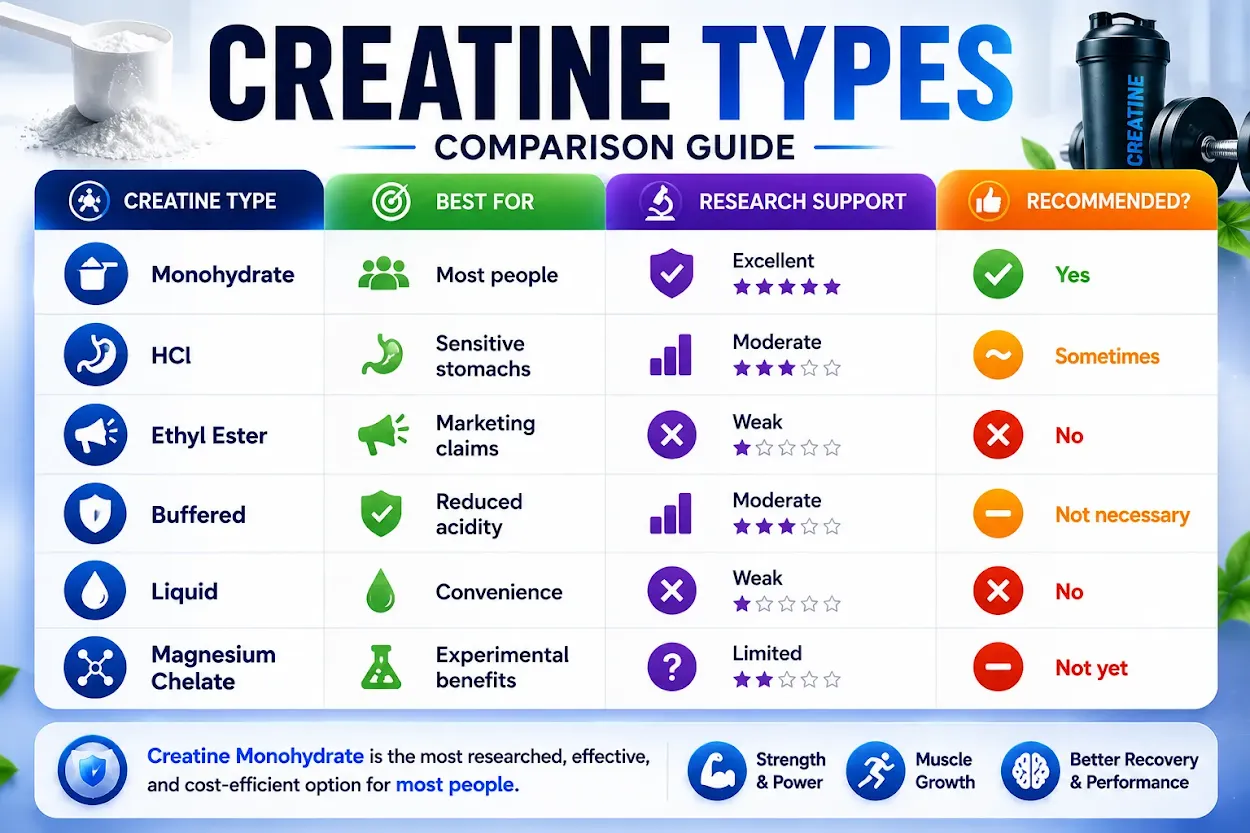 Walk into any supplement store and you’ll find creatine in half a dozen forms. Here’s a breakdown of each one, what the research actually says, and whether any of them are worth your money over the classic option.
Understanding these types of creatine can help you choose the best supplement for your goals.
Walk into any supplement store and you’ll find creatine in half a dozen forms. Here’s a breakdown of each one, what the research actually says, and whether any of them are worth your money over the classic option.
Understanding these types of creatine can help you choose the best supplement for your goals.